How Big Is a Storage Unit? A Vero Beach Size Guide
Every storage company has its own online size guide. We reviewed the guides from major storage operators, including CubeSmart, Public Storage, and Spacebox Storage, and pulled together some of the most useful advice, practical tips, and sizing information for Vero Beach renters.
Whether you’re moving house, storing seasonal items, downsizing, or looking for RV and boat storage, understanding storage unit sizes can save both money and frustration.
How Are Storage Units Measured?
Unless otherwise specified, storage units are advertised using width × length.
For example:
5×10 storage unit = 5 feet wide and 10 feet deep
Most storage units are approximately 8 feet tall, although actual height can vary depending on the building design.
Height matters because storage isn’t just measured by floor space. A typical 5×10 unit contains:
50 square feet of floor space
Approximately 400 cubic feet of storage volume
Many renters underestimate how much can fit inside a unit when boxes and furniture are stacked safely.
As Extra Space Storage points out, storage volume is often just as important as floor space when comparing units.
Why Height Can Vary
Storage facilities typically limit stacking height to protect fire suppression systems and sprinkler heads.
Some facilities use:
Full-height walls
Wire mesh ceilings
Security bars above the unit
Even if there isn’t a solid ceiling, renters should never stack belongings above the designated storage height.
What Is a Storage Locker?
If a storage unit has reduced height, it is usually advertised accordingly.
Examples include:
5×5×5
Storage Locker
Reduced Height Unit
Descriptions may also include:
Rolling Stair Access
Upper-Level Access
Reduced Height
Locker Storage
These smaller units are often under 25 square feet and can be an economical option for students, seasonal residents, or people storing only a few boxes.
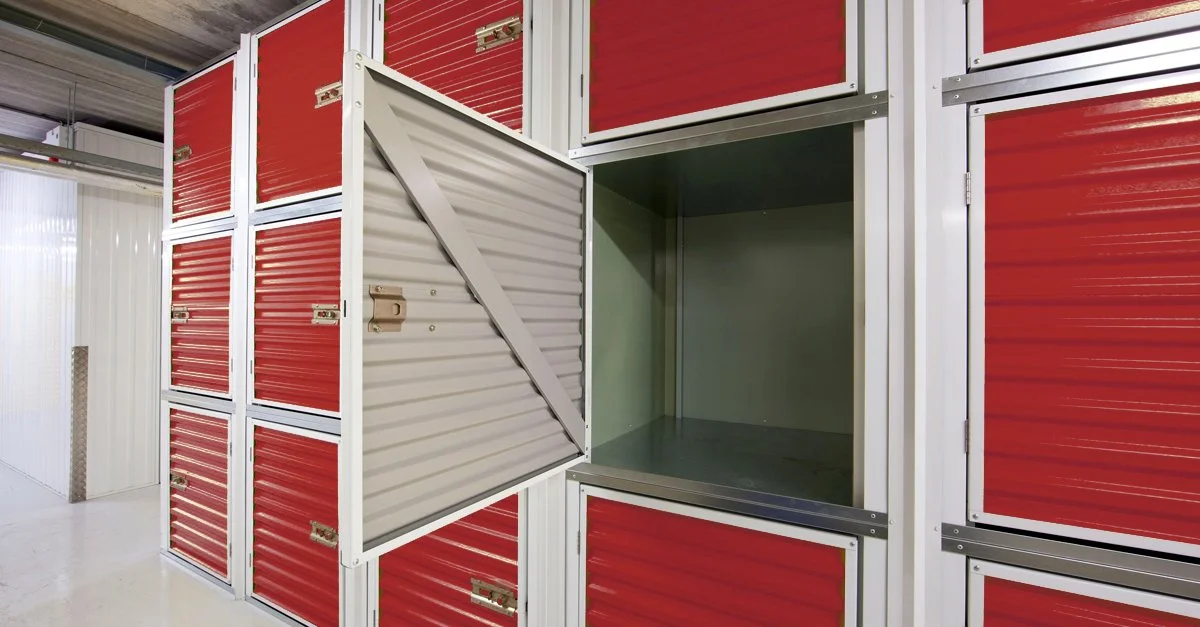
Storage Locker
Common Storage Unit Types
Beyond size, many facilities use additional descriptions that can affect convenience and pricing.
Drive-Up Access
Drive-up units allow you to park directly outside your storage unit.
Benefits include:
Easier loading and unloading
Better for heavy furniture
Ideal for contractors and businesses
Convenient for frequent access
Ground-Level Access
These units are located on the first floor and can be reached without stairs or elevators.
Elevator Access
These units are located on upper floors and require elevator access.
Elevator-access units are common in newer multi-story facilities.
Multi-Door Access
A multi-door storage unit has more than one entry door, which means you’ll typically need two locks to secure the unit.
Depending on the facility, this can provide convenient access from either side of the unit.
In some cases, a multi-door unit may actually be two adjoining units connected by an opening in the dividing wall.
Because layouts vary, it’s always worth viewing the unit before renting.
Public Storage’s Couch Test
Public Storage offers another simple way to think about sizing.
Loveseat → 5×5 Unit
A 5×5 unit can typically fit:
Loveseat
Several boxes
Small furniture
Seasonal decorations
Standard Sofa → 5×10 Unit
A 5×10 unit can typically fit:
Three-seat couch
Bedroom furniture
Small apartment contents
Sectional Sofa → 10×10 Unit
A 10×10 unit can typically fit:
Large sectional sofa
One-bedroom apartment contents
Multiple furniture pieces
Common Storage Unit Sizes
5×5 Storage Unit (25 sq ft)
Comparable to a small closet.
Typically holds:
Boxes
Luggage
Holiday decorations
Small furniture
Sports equipment
Good for students between semesters.
5×10 Storage Unit (50 sq ft)
Comparable to a walk-in closet.
Typically holds:
Bedroom furniture
Mattress set
Several boxes
Small apartment contents
Popular for University students and seasonal residents.
10×10 Storage Unit (100 sq ft)
One of the most common unit sizes.
Typically holds:
One-bedroom apartment
Furniture
Appliances
Multiple rooms of belongings
10×15 Storage Unit (150 sq ft)
Typically holds:
Two-bedroom apartment
Small house contents
Larger furniture sets
10×20 Storage Unit (200 sq ft)
Typically holds:
Three-bedroom house
Major appliances
Garage contents
Large furniture
Many movers use 10×20 units during home renovations or relocations.
Match Your Storage Unit to Your Moving Truck
CubeSmart offers a useful sizing shortcut.
As a rough guide:
12-foot truck = 10×10
16-foot truck = 10×15
22-foot truck = 10×20
While not exact, this can provide a quick starting point when planning a move.
Spacebox’s Best Tip: Have a Plan
One of the most practical suggestions we found came from Spacebox Storage.
Before moving into your storage unit:
Put frequently used items near the front
Place long-term storage items toward the back
Leave a pathway for access
Group similar items together
This simple approach makes future visits much easier.
Leave Yourself an Aisle
Many storage operators recommend renting slightly larger than your minimum requirement.
Why?
Because a completely full storage unit can become difficult to use.
Leaving a narrow aisle allows access to:
Furniture
Documents
Seasonal items
Boxes stored toward the rear
A slightly larger unit often saves significant frustration later.
Vehicle, Boat & RV Storage Sizes
Unlike traditional storage units, vehicle storage spaces are usually measured by parking length.
10×15 Vehicle Storage Space
Typically suitable for:
Motorcycles
Jet skis
Small personal watercraft
ATVs and UTVs
Compact vehicles
10×20 Vehicle Storage Space
Typically suitable for:
Most sedans
Small SUVs
Jet skis on trailers
Small utility trailers
10×25 Vehicle Storage Space
Typically suitable for:
Pickup trucks
Mid-size SUVs
Small boats on trailers
Multiple motorcycles
10×30 Vehicle Storage Space
Typically suitable for:
Full-size trucks
Large SUVs
Medium boats on trailers
Small campers
10×40 Vehicle Storage Space
Typically suitable for:
Class A motorhomes
Fifth wheels
Large travel trailers
Larger boats on trailers
Truck and trailer combinations
Which Size Is Right for You?
If you’re unsure, start by answering three questions:
How many rooms are you storing?
Will you need frequent access?
Are you storing a vehicle, boat, or RV?
When in doubt, visit the facility and view the unit in person.
Most renters find it easier to visualize space after standing inside the actual unit.
Explore More Vero Beach Storage Guides
How Much Storage Space Do I Need When Moving Out of a House in Vero Beach?
Summer Moving Guide for Vero Beach, FL
Self Storage Tips Vero Beach (Summer Season Guide)
RV & Boat Storage Rules in Vero Beach (Complete Guide)
Best Self Storage Options in Vero Beach, FL (2026 Market Review)
Final Thoughts
Storage unit sizes can be confusing at first, but the process becomes much easier when you think in terms of rooms, furniture, and vehicles rather than square footage alone.
For household storage, most renters choose between a 5×10, 10×10, or 10×20 unit.
For vehicle storage, understanding the length of your boat, RV, trailer, or vehicle is usually the most important factor.
The best approach is to estimate conservatively, leave yourself some room for access, and visit the facility before renting whenever possible.